Top 9 AI Chatbots for your Business Website
452 views
Share:

Are you tired of spending countless hours on customer support? Have you ever wondered if there's a smarter way to engage your website visitors without stretching your resources thin? Enter AI chatbots—those nifty digital assistants that can handle queries, gather leads, and provide support at lightning speed. The burning question is: which chatbot is best for your business website?
If you want to scale your customer support, boost conversion rates by up to 25%, and keep your sales funnel active 24/7 without hiring a massive team, you need an automated support tool that works ruthlessly for your bottom line.
Quick Navigation: What We Will Cover
Why Web Chat Automation Drives Real Revenue
9 Smart Virtual Assistants to Transform Your Business Website
Smart Best Practices for Setting Up Your Assistant
Frequently Asked Questions About Website AI Chatbots
Take Action to Automate Your Business Growth
Why Web Chat Automation Drives Real Revenue
Have you ever wondered why some online brands grow exponentially while others struggle to convert the traffic they pay so much to acquire? The secret usually lies in their immediate response times. Modern consumers have zero patience for waiting on email responses, and an automated support tool bridges that gap instantly.
An AI chatbot boosts business revenue by instantly engaging website visitors 24/7, qualifying raw traffic into hot leads, and resolving repetitive support questions. By removing buying friction and automatically booking sales appointments, online businesses frequently experience a 20% to 25% increase in overall conversion rates.
But wait, does adding an automated widget to your header actually move the needle for your business operations? Absolutely. Let’s look at three proven ways these platforms actively scale your growth:
Drastic Ticket Deflection: By automatically answering recurring questions regarding tracking numbers, return policies, and basic pricing tiers, an online assistant can easily deflect over half of your inbound support load. This frees up your human support agents to tackle complex, high-stakes client issues.
Constant Lead Generation: Instead of letting anonymous users browse your site and leave forever, a proactive greeting can catch their attention, offer a valuable lead magnet, and securely capture their contact information.
Reduced Cart Abandonment: By deploying exit-intent triggers—where the chat bubble pops up with a small discount code or a helpful prompt right as a user moves their cursor to close the window—brands regularly rescue sales that would have otherwise been lost.
9 Smart Virtual Assistants to Transform Your Business Website
With dozens of conversational tools flooding the market, finding the perfect match for your specific platform can feel completely overwhelming. To help you bypass the noise, we have thoroughly analyzed and compiled the absolute best website automation tools available right now. This comprehensive guide breaks down the top platforms by cost, ease of use, and unique capabilities so you can find the perfect solution to maximize your digital storefront.
1. Lonare.com
When it comes to launching a highly targeted, conversation-driven assistant without breaking the bank, Lonare.com stands out as the ultimate free solution for modern businesses. It is purpose-built to eliminate the technical friction that usually keeps small business owners from leveraging advanced artificial intelligence.
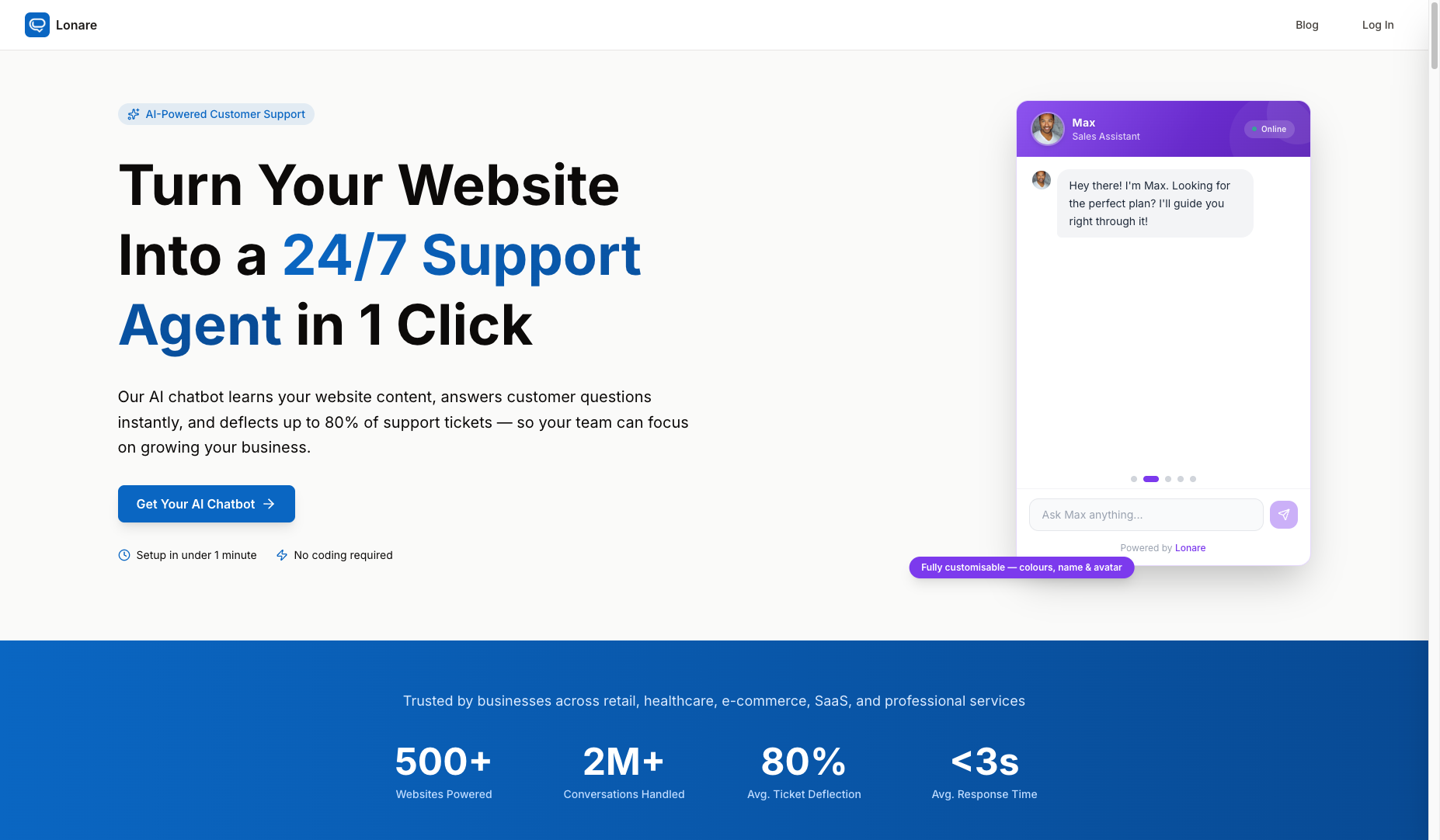
Here’s the thing: most "free" tools on the market wall off their best customization options behind massive paywalls. Lonare.com breaks this trend by letting you train your virtual assistant directly on your website links, custom brand data, and specific product information right from the start.
Why it works: It acts as an aggressive lead extraction tool that adapts perfectly to your brand voice, ensuring customers get accurate answers instead of generic, robotic replies.
What to know: While it is incredibly powerful for scaling customer interactions and gathering lead data, larger enterprises might eventually require custom integrations as their infrastructure expands.
2. Tidio Lyro
If you run an online retail store, you have probably heard of Tidio. Their signature AI engine, Lyro, is a powerhouse for small to medium-sized eCommerce brands looking to slash ticket backlogs.
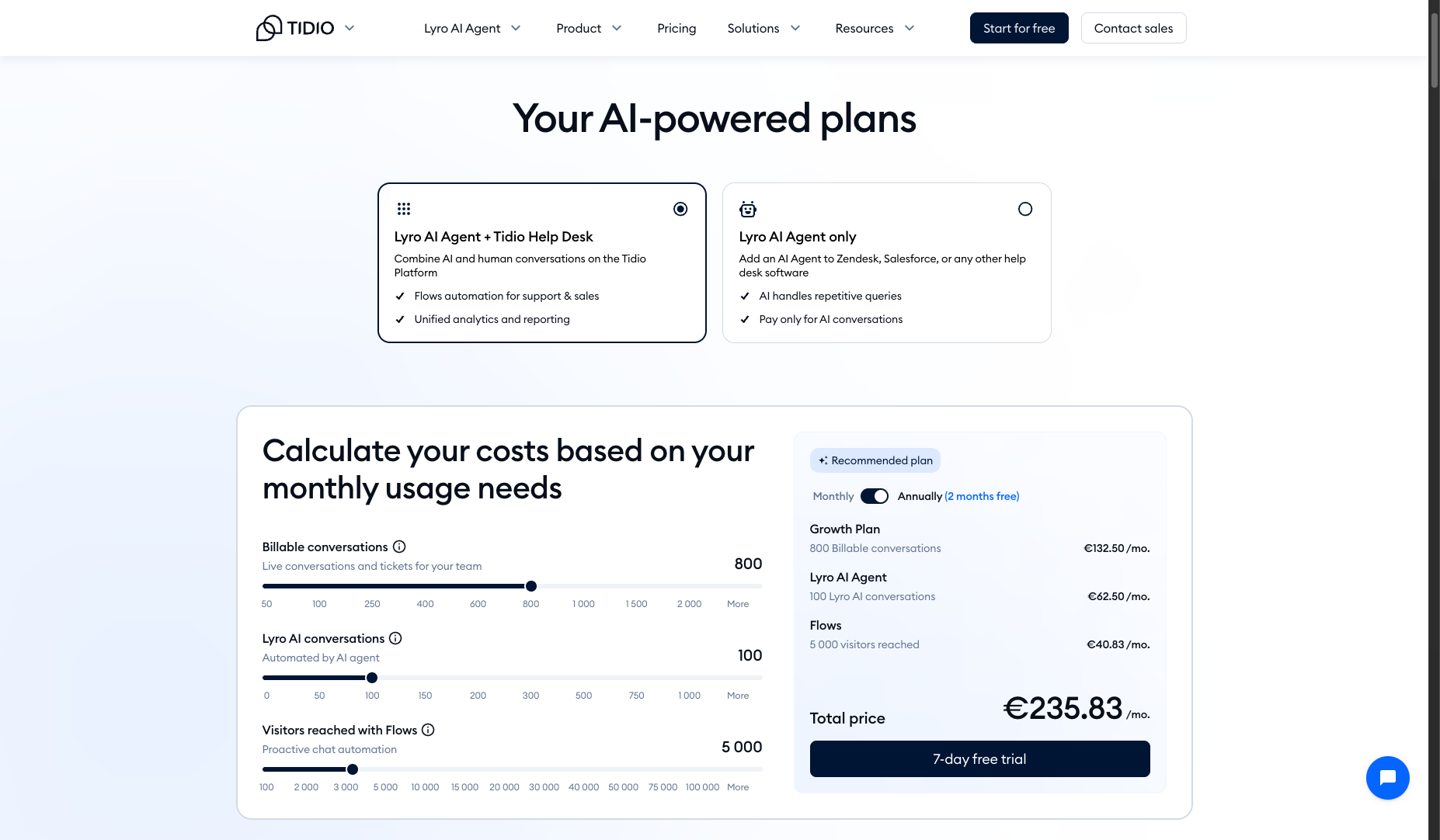
According to real-world user data published by Egnoto, Tidio's Lyro AI agent can successfully resolve up to 67% of customer support requests entirely on its own. It hooks effortlessly into Shopify, WooCommerce, and Magento, meaning it can check shipping statuses or pull product recommendations for your shoppers in real time. The visual builder is incredibly easy to navigate, allowing you to build automated marketing workflows in minutes.
Why businesses choose Tidio over LiveChat
Tidio includes powerful Lyro AI Agent in core plans, while LiveChat charges extra for basic chatbots that users find expensive and limited for smaller businesses.
3. HubSpot Chatflows
Are you already using HubSpot to manage your sales pipeline? Then using HubSpot Chatflows is an absolute no-brainer. Instead of paying for a third-party connector to pass customer information back and forth, this built-in tool logs every single chat transcript directly into your central CRM system.
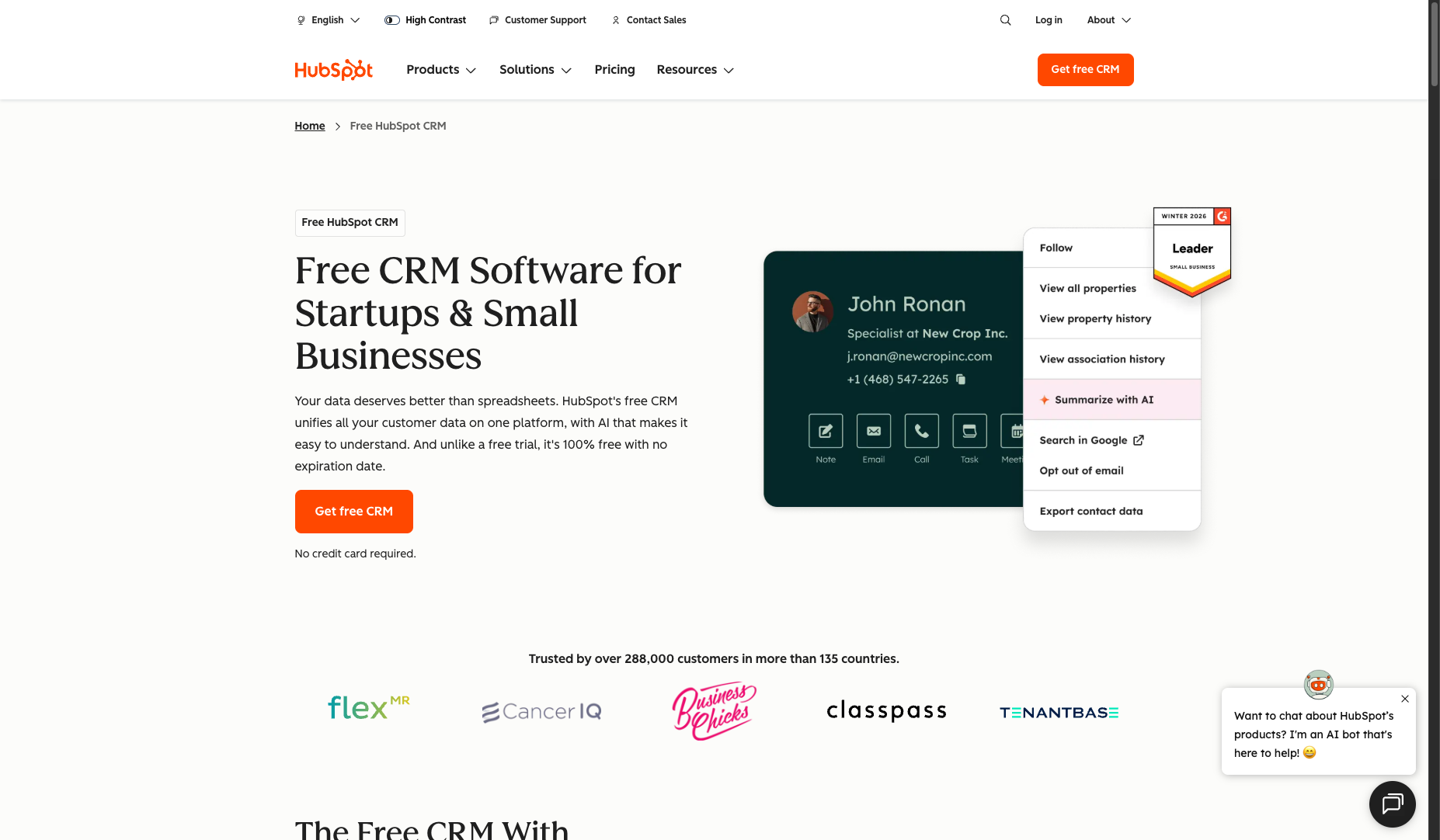
Now here’s where it gets interesting: because it is connected directly to your underlying customer records, the bot can recognize returning high-value prospects instantly. It can pull up their past purchase history, change its greeting based on their business size, or route them straight to their dedicated account executive.
4. Fin by Intercom
For rapidly growing software startups and established enterprise businesses, Intercom’s 'Fin' agent represents the cutting edge of conversational support. Fin runs on highly advanced large language models, allowing it to interpret complex, multi-part questions that would completely confuse simpler tools.
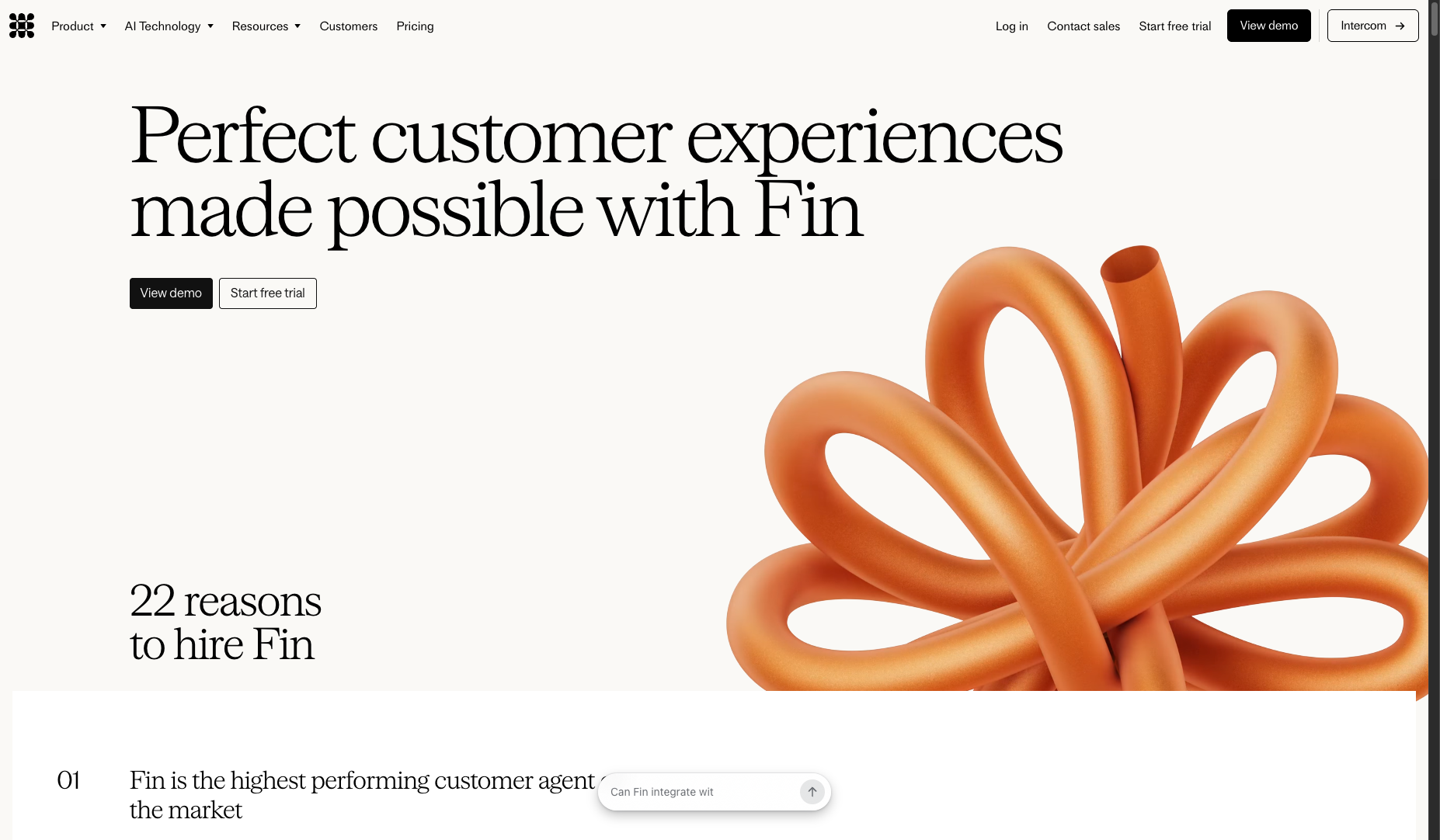
Data shows that Fin routinely resolves up to 70% of common customer service questions without any human intervention. It scans your internal help center docs and public web pages to deliver highly accurate, safely guarded answers. The starting price of $74 per month is higher than basic widgets, but the massive drop in manual support tickets makes it well worth the investment for scaling teams.
5. Drift
Drift isn’t just a simple chat box; it is an enterprise-grade platform explicitly built for conversational marketing and account-based sales. If your primary goal is to turn cold website traffic into qualified enterprise leads, this is your weapon of choice.
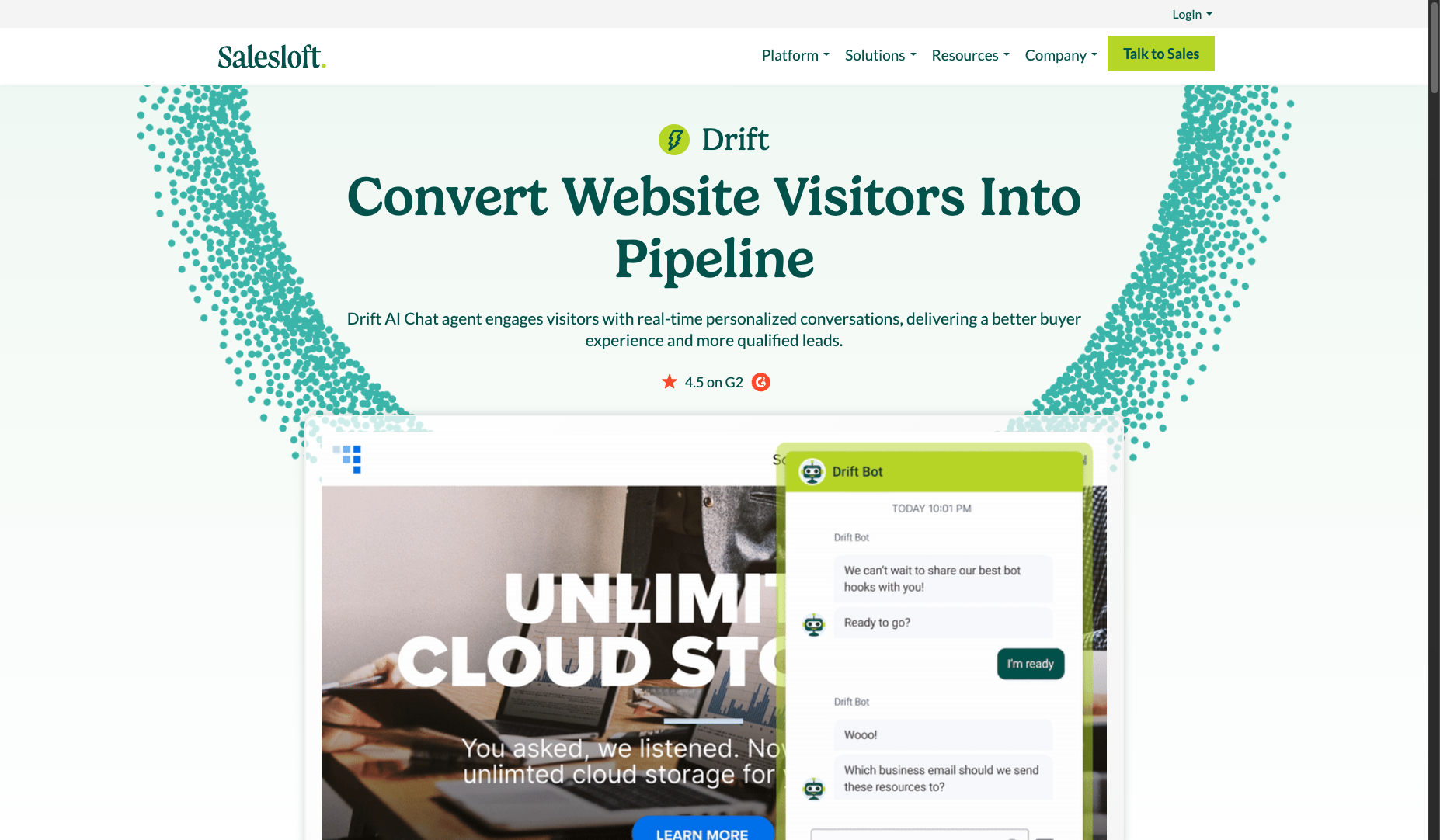
Instead of focusing heavily on resolving standard support tickets, Drift ruthlessly qualifies visitors by asking targeted questions about their budget, company size, and immediate needs. Once a high-value lead is identified, the bot hooks directly into your sales team’s Google or Outlook calendars to book live software demos instantly.
6. Jotform AI Chatbot
If your business relies heavily on gathering structured data, like client onboarding questionnaires, custom service bookings, or structured feedback forms, the Jotform AI Chatbot is an incredible option.
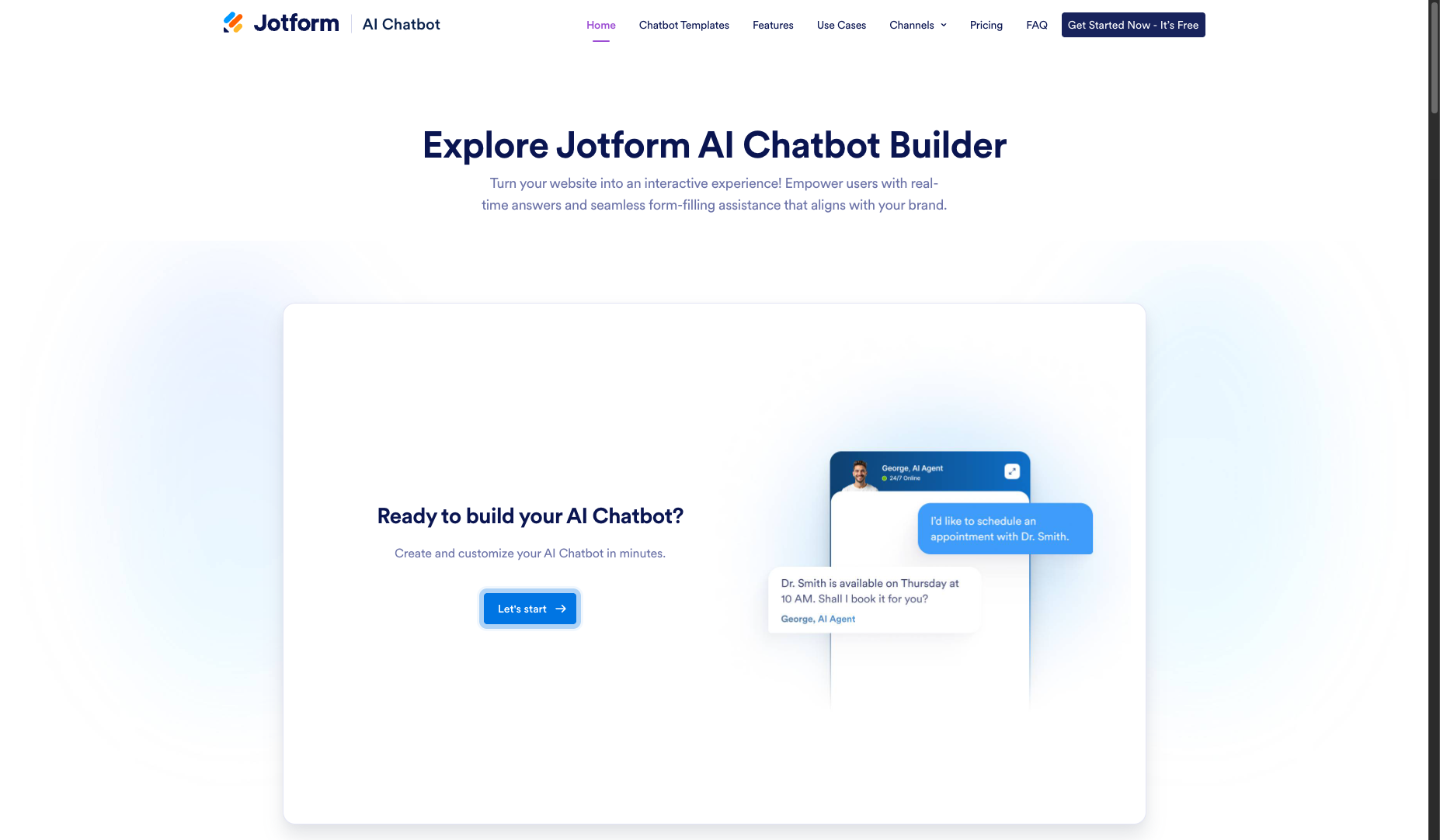
This platform shines because it translates simple chat conversations directly into organized form fields behind the scenes. Instead of forcing a user to fill out a long, intimidating static form on your webpage, the assistant collects their name, email, budget, and project details through a friendly conversation, mapping the data directly to your preferred database or CRM system.
7. Botpress Community
For the developers, tech-stack architects, and product managers out there who demand absolute control over their code, Botpress Community offers a robust, open-source playground.
This platform gives you complete API control and a modular architecture to build highly custom web assistants from scratch. You can design intricate custom logic, implement sentiment analysis, and link your assistant directly to private external databases. There is a learning curve if you aren’t familiar with programming, but the sheer scalability and lack of arbitrary restrictions make it a developer favorite.
8. Manychat Lite
Manychat originally built its massive reputation by dominating chat automation across social channels like Facebook Messenger and Instagram DMs. However, their web widget brings that exact same marketing-funnel magic directly onto your main business website.
Manychat Lite is fantastic for running promotional drip campaigns and capturing leads through interactive quizzes. If a substantial portion of your overall target audience finds your business through social channels, using a unified tool like Manychat allows you to manage all of your diverse conversation streams under one roof.
9. Heyy.io
Rounding out our list is Heyy.io, an exceptional platform engineered specifically for businesses drowning in fragmented communication channels. We all know the headache: a customer texts your brand on WhatsApp on Monday, sends an Instagram DM on Wednesday, and then opens a chat bubble on your website on Friday.
Heyy.io completely solves this multi-channel chaos by unifying every single inbox into one smart system. The assistant maintains a single, continuous context history for each customer across every platform. This means your buyers never have to repeat their issues, and your team gets a crystal-clear picture of every interaction.
Smart Best Practices for Setting Up Your Assistant
Deploying a conversational tool involves much more than just pasting a code snippet into your website's global header and hoping for the best. To build an automated system that genuinely delights your visitors, you need to set up smart guardrails and strategic workflows.
Train on Deep Internal Data
Your assistant is only as smart as the information you give it. Take the time to feed your platform comprehensive data, including your full product catalog, internal knowledge base articles, and past customer service emails. The more structured context you provide, the lower the risk of the system generating incorrect answers.
Establish Smooth Human Handovers
No matter how advanced machine learning models become, there will always be nuanced situations that require a human touch. Ensure your workflow includes a clear escalation path. When a user expresses frustration or asks a complex, high-stakes question, the assistant should seamlessly alert your live team and hand over the full conversation history without missing a beat.
Frequently Asked Questions About Website AI Chatbots
What is the best way to choose between a free and a paid AI chatbot?
The best way to choose depends heavily on your overall conversation volume and customization needs. If you are a small business looking to capture basic lead info and answer simple questions, a free platform like Lonare.com or Tidio's free tier is perfect. However, if you require deep enterprise CRM integrations or handle thousands of complex support tickets a month, investing in a paid tier like Intercom or Drift is highly recommended.
How do I quickly integrate an AI chatbot onto my business website?
How do I quickly integrate one? It typically takes less than five minutes. Most modern no-code platforms provide a short JavaScript widget code snippet. All you need to do is copy that snippet and paste it directly into the HTML header or footer settings of your website builder, whether you use WordPress, Wix, Shopify, or a custom Next.js stack.
Will using an automated assistant slow down my page load speed?
Most reputable modern chat tools are built to load asynchronously. This means the main content of your website loads completely first, and the chat widget initializes a fraction of a second later in the background. As a result, it won't hurt your user experience or your search engine rankings.
Take Action to Automate Your Business Growth
At the end of the day, implementing an automated assistant isn't about replacing human connection—it’s about making sure your business is always available when your customers need help the most. By letting smart automation handle the repetitive questions and routine lead qualification, you give your business the freedom to scale smoothly.
Take a look at your current website strategy and identify your biggest bottleneck. Are you losing leads after hours? Is your team buried under repetitive emails? Pick a platform from our list that aligns with your budget, set up your initial data training, and start turning your passive website visitors into loyal customers today.
Related Posts


